
Most Australians choose a home safe based on price or size, then discover their insurer won’t cover the contents, or that the safe can be walked out the door in minutes. Getting it right comes down to five factors: cash rating, fire rating, bolt anchoring, lock type, and size. Whether you’re looking for the best home safe in Australia or just trying to decode a spec sheet, this guide covers what actually matters.
Before You Buy: A Quick Home Safe Checklist
- Cash rating meets your insurer’s requirements. Check for both cash coverage and valuables multiplier
- Fire rating is appropriate for what you’re storing and where the safe will be located
- Bolt anchoring is possible in your chosen location. Check your floor type and have the right fixings ready
- Lock type matches your access pattern. Digital for regular use, key for occasional, dial for long-term storage
- Internal size comfortably fits your largest item, with room for future additions
The 5 Factors That Determine Whether a Home Safe Is Right for You
Cash Rating - What Your Insurer Actually Cares About
The cash rating is the maximum cash value your insurer will cover if the safe is attacked or stolen. In most Australian policies, jewellery is covered at roughly ten times the cash rating, a safe with a $45,000 cash rating may support up to $450,000 in jewellery coverage. Confirm the exact multiple with your insurer.
For households storing significant valuables, a higher-rated model from the Stronghold home safes range works effectively as a jewellery safe for the home. For everyday needs, a compact home security safe at the entry end of the range is a solid starting point.
Cash rating is a security specification, not a fire specification. Check both independently.
Fire Rating - What a Home Safe Actually Protects (and What It Doesn't)
No safe is fireproof; the correct term is fire-resistant. If you’re searching for a fireproof home safe, what you need is a fire-resistant home safe with a verified rating. What you’re storing determines what rating you need:
- Paper documents, cash, passports: Protected below 177°C. A 40-minute fire rating covers most metropolitan residential fires.
- Digital media: Vulnerable below 52°C. Standard home safes don’t protect USB drives, hard drives, or photos; you need a dedicated media safe.
Stronghold home safes use 12mm fireboard lining and expanding fire seals throughout. Ground floor, floor-level placement always maximises protection; heat rises sharply on upper storeys.
Bolt Anchoring - Why You Need to Bolt Down Your Safe
Thieves don’t crack safes on-site; they remove them. An unanchored home safe is a liability regardless of its rating. Stronghold home safes come with recessed anchor bolt holes as standard.
Check your policy before home safe installation; some Australian insurers require anchoring as a condition of coverage.
Lock Type - Digital Keypad, Key Lock, or Dial Combination?
All Stronghold Home Safes use Australian-made mechanisms. Match the lock to your usage:
- Digital keypad – fast PIN access, batteries last 12-18 months. Best for regular use. The most popular choice for a digital lock safe used daily.
- Key lock – battery-free, simple. Best for occasional access. A key lock safe suits long-term document storage where speed of access isn’t a priority.
- Dial combination – no electronics, decades of reliability. Best for long-term storage.
Size and Placement - Choosing the Right Size Home Safe
Buy for three years of storage, not just today. A small home safe suits a single household’s essentials. For households with more to store, larger models in the range step up in capacity without taking up excessive floor space.
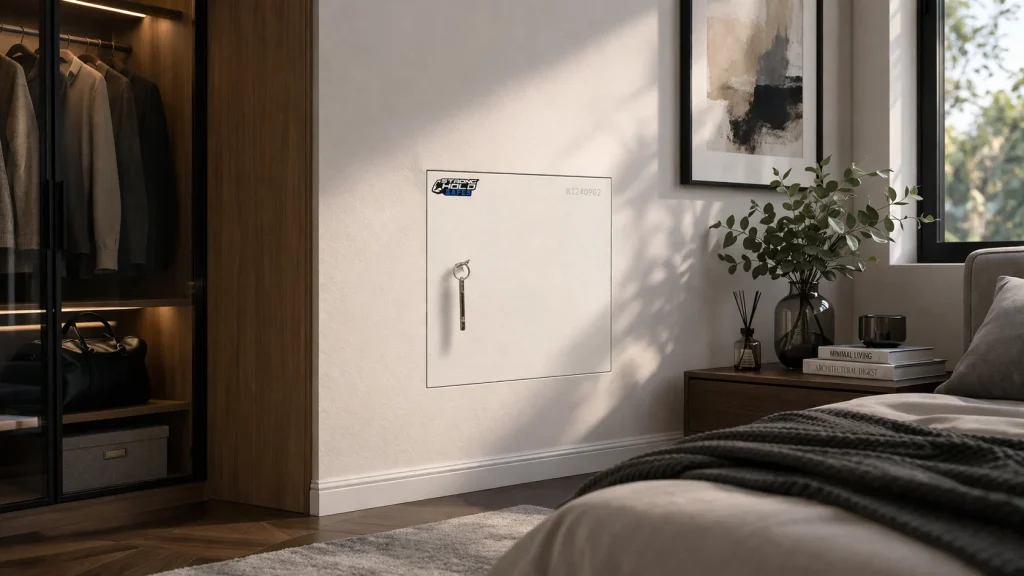
Bedroom and home office locations offer the best accessibility and concealment. Avoid garages and garden sheds, as humidity damages both the body and the locking mechanism. Stronghold also offers floor safes and wall safes for concealment-first buyers.
Frequently Asked Questions About Home Safes
A bedroom or home office is ideal, low-traffic, not immediately visible to visitors. Avoid the master bedroom if possible, as it's typically the first place burglars search. Wherever you install it, bolt it to the floor.
Passports, insurance policies, power of attorney documents, and emergency cash are well-suited to a home safe, items you need occasional access to but can't easily replace. Large sums of cash and original title deeds are better kept in a bank safety deposit box.
Heavier is harder to steal but weight alone isn't enough without anchoring. A group of thieves can still remove large safes if they have the right equipment, which is why bolt-down installation matters regardless of how heavy the safe is.
Yes. Installing an electronic safe in a laundry, garage, or basement can cause the lock to fail prematurely due to high humidity. Stick to a dry indoor location, bedroom or home office and avoid garages and garden sheds.
Most fire-rated home safes offer limited water resistance but are not waterproof. If you bolt down the safe, its waterproofing may be compromised. For irreplaceable documents, store them in a sealed plastic bag inside the safe as an extra precaution.
A home safe gives you 24/7 access and covers everyday valuables well. Original birth certificates, car titles, and the deed to your home are better suited to a bank safety deposit box, where the risk of fire or theft is lower. Many households use both.
Stronghold Safes are Australian-owned and manufactured, backed by a 5-year safe warranty and 12-month lock warranty. Whether you need a home security safe for everyday valuables or a higher-rated model for significant cash and jewellery, browse the full Stronghold Home Safes range to find the right fit. For workplaces and commercial premises, explore the business and commercial safes range.