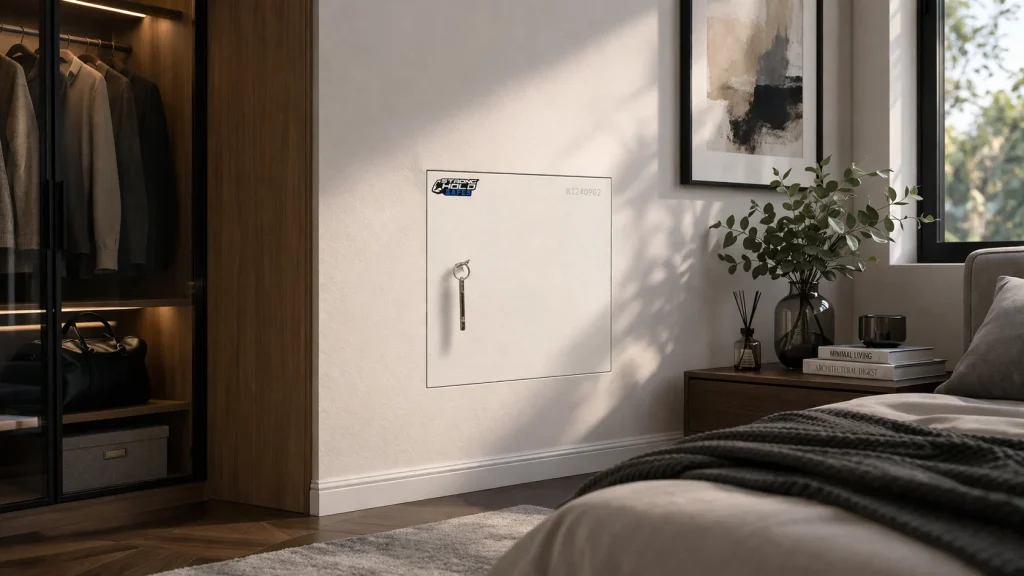

A home safe is one of the most practical investments you can make to protect your valuables. But when it comes to fire protection, not all safes are built the same, and not every household needs the same level of fire resistance. Understanding what fire ratings mean, how they’re tested, and what they actually protect will help you make a more informed decision when choosing a home safe.
Why Fire Protection Matters for Home Safes
Most people buy a safe with theft prevention in mind. That makes sense, but fire is statistically a more common threat to household valuables than burglary. A house fire can reach temperatures above 900°C within minutes. At those temperatures, paper documents begin to char at around 177°C, and digital media like USB drives and hard drives can fail at even lower thresholds.
If your safe contains passports, birth certificates, property titles, insurance policies, or digital backups, fire protection is not optional. It is a core part of what the safe needs to do. Without adequate fire resistance, the contents of an otherwise strong safe can be destroyed in a matter of minutes during a house fire.
What a Fire Rating Actually Means
A fire rating is not a vague marketing claim. It is a tested, certified measure of how a safe performs when exposed to fire conditions under controlled laboratory testing.
Understanding Fire Resistance Testing
During fire resistance testing, a safe is placed inside a furnace that simulates the conditions of a real fire. The furnace temperature is raised according to a standardised time-temperature curve, and the internal temperature of the safe is monitored throughout. The test measures whether the internal temperature stays below a critical threshold for the rated duration.
The safe must also typically survive a drop test (simulating a floor collapse) and a re-heating cycle, depending on the standard being applied. These tests are designed to replicate what actually happens in a building fire, not just steady heat exposure.
Temperature Limits and Protection Levels
Different contents have different vulnerability thresholds, and fire ratings reflect this:
- Paper protection: the internal temperature must stay below approximately 177°C (350°F). This covers documents, certificates, cash, and paper-based records.
- Digital media protection: the internal temperature must remain below approximately 52°C (125°F), with humidity also controlled. This is a much stricter standard and applies to USB drives, hard drives, optical discs, and similar storage.
This distinction is important. A safe rated for paper protection will keep documents intact, but it may not protect digital media. If you store both, you need to check whether the safe’s rating covers the most heat-sensitive items inside it.
How Long Fire-Rated Safes Are Designed to Perform
Fire ratings are expressed in time, most commonly 30 minutes, 60 minutes, or 120 minutes. This is the duration for which the safe maintained its internal temperature below the rated threshold during testing.
A 30-minute rating is generally considered the minimum for residential use. It provides enough time for most house fires to be brought under control or for the safe to survive the peak burn period in its immediate area.
A 60-minute or 120-minute rating provides a greater margin of safety, particularly for homes in bushfire-prone areas or for safes stored in locations that may be harder for fire services to reach quickly, such as garages, sheds, or basements.
What Fire Ratings Protect, and What They Don't
A fire-rated safe is designed to protect its contents from heat damage during a fire. It does this through insulation materials (such as fire-board and expanding fire seals) that slow the transfer of heat from the exterior to the interior.
However, fire ratings do not cover every scenario:
- Water damage: Firefighting efforts often involve large volumes of water. While some safes include seals that help resist water ingress, a fire rating alone does not guarantee waterproof protection.
- Structural collapse: If a building collapses and buries or crushes a safe, the physical impact may exceed what the safe was designed to withstand, even if the fire rating holds.
- Prolonged exposure beyond the rated time: A 30-minute rated safe is tested for 30 minutes. If a fire burns in the same area for significantly longer, the internal temperature may eventually rise beyond the protection threshold.
Understanding these limitations is not a reason to skip fire protection. It is a reason to choose the right level of protection for your situation and to position your safe thoughtfully within your home.
Do You Need a Fire-Rated Safe for Your Home?
For most Australian households, some level of fire protection is worth having. If your safe contains any of the following, fire resistance should be a factor in your decision:
- Passports, birth certificates, and identity documents
- Property titles, wills, and insurance policies
- Cash or high-value jewellery
- USB drives, hard drives, or memory cards with irreplaceable files
- Tax records and signed contracts
If you are primarily storing items that are replaceable or insured separately, a safe focused on theft protection may be sufficient. But for documents and digital media that would be costly or impossible to replace, choosing a safe with verified fire protection adds a meaningful layer of security.
The decision is ultimately about matching the safe’s capabilities to what you are storing and the level of risk you are comfortable with.
Choosing the Right Home Safe for Your Needs
Fire protection is one factor in choosing a home safe, but it works alongside other considerations: cash rating and insurance compliance, locking mechanism, size, and how the safe will be installed.
Stronghold home safes are built with fire protection features including expanding fire seals around the door frame and fire-board insulation. The specific level of fire protection varies by model, so it is worth checking the specifications for the model you are considering to confirm it meets your needs.
If you are unsure where to start, our guide on how to choose the right home safe covers cash ratings, locking options, and sizing alongside fire protection, giving you a complete picture before you buy. Businesses looking to protect documents, files, and records may also want to consider a security cabinet with fire-resistant construction.
Every Stronghold safe is backed by a 5-year safe warranty and 12-month lock warranty, with Australian-made KJ Ross digital and key locks as standard.
Choosing the Right Level of Fire Protection
There is no single fire rating that suits every household. The right choice depends on what you are storing, where the safe sits in your home, and how much margin of safety you want. A 30-minute paper protection rating covers most residential needs. If you are storing digital media or live in a higher-risk area, a longer rating or media-specific protection may be appropriate.
If you have questions about which Stronghold safe suits your situation,get in touch with our team for guidance based on what you need to protect. You can also visit our showroom at 54 Barrie Rd, Tullamarine to see the range in person.