
A break away from home should be something you look forward to, not something that keeps you checking your phone for alerts. Most Australians know they should “lock up” before travelling, but few go beyond turning the deadbolt on the front door. A proper pre-holiday security routine takes 30 minutes and covers every weak point that could be exploited while you’re gone.
This checklist covers four areas before you leave: a physical security sweep, securing your valuables, making your home look lived-in, and confirming your alarm setup is actually working.
Start with a Home Security Check Before You Travel
A full walkthrough of your property a day or two before departure gives you time to fix anything that needs attention. Rushing through it on the morning of your flight rarely ends well.
Checking Doors, Windows, and Entry Points
Walk the perimeter of your home and test every external door and window, including ones you rarely use. Side gates, laundry doors, and garage access points are common oversights. Check that sliding doors have functioning track locks or security bars, and confirm that window latches engage properly rather than just sitting in the closed position.
If you have a dog door or cat flap, consider whether it could be used to reach an internal lock. For extended trips, blocking or locking pet doors removes a surprisingly common entry method.
Identifying Security Vulnerabilities Before You Leave
Stand back and look at your property the way a stranger would. Are there tools, ladders, or wheelie bins positioned near fences or windows that could make access easier? Trim back any dense shrubs near entry points that provide cover, and make sure exterior lighting covers your front door, driveway, and any side access.
A good rule: if someone could approach a door or window without being visible from the street or a neighbour’s house, that’s a vulnerability worth addressing before you go. The same thinking applies inside the house. If you keep prescription medications at home, confirm they’re stored in a compliant drug safe rather than a bathroom cabinet, where they’re both a theft target and a liability during an extended absence.
Testing Locks and Security Hardware
Deadbolts, window locks, padlocks on sheds, and garage door mechanisms all deserve a quick function test. A lock that sticks or doesn’t fully engage may fail while you’re away. If you have a key safe mounted externally for trusted visitors or tradies, confirm the code works and the housing is secure.
Replace any batteries in smart locks or keypad entry systems now rather than hoping they last another fortnight.
Secure Valuables and Important Documents Before Leaving
This is where preparation makes the biggest difference. Insurance policies often have specific requirements around how valuables were stored at the time of a loss, and “on the bedside table” is rarely compliant.
What Should Be Stored in a Home Safe
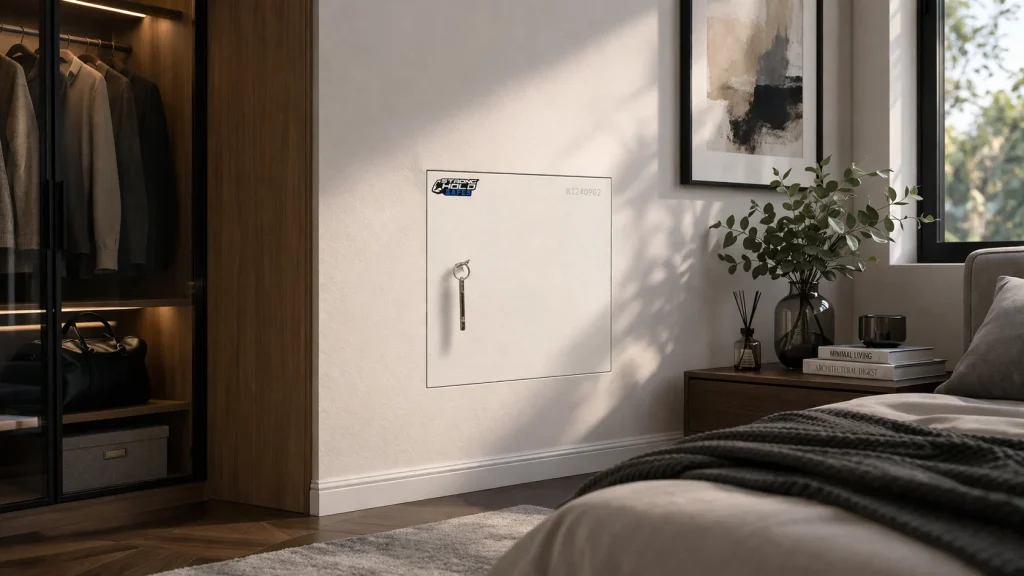
If you own a home safe, the week before a holiday is the time to use it properly. Cash, jewellery, watches, spare car keys, and portable electronics like tablets or external hard drives should all go inside. The same applies to any items with sentimental value that would be impossible to replace.
Protecting Passports, Jewellery, and Emergency Documents
If you’re travelling domestically, your passport can stay behind in the safe. The same goes for birth certificates, property titles, wills, and insurance policy documents. These are among the most time-consuming items to replace if lost to theft or fire, and they gain nothing from sitting in a desk drawer while you’re away.
For jewellery, the approach is straightforward: anything you’re not wearing on the trip goes into the safe. Spreading items across multiple hiding spots is less secure than centralising them in a single, properly rated safe bolted to the floor.
Avoiding Common Mistakes When Securing Valuables
The most common mistake is leaving valuables in “clever” hiding spots rather than in a safe. Bedroom drawers, wardrobes, and bookshelves are the first places an intruder checks. A frozen food container in the freezer is not a security strategy.
The second mistake is assuming your safe’s cash rating matches your contents. If you’re storing $15,000 worth of jewellery in a safe rated to $5,000, your insurer may not cover the full amount. Check your rating against what’s inside and speak to your insurer if there’s a gap.
Make Your Home Look Occupied While You're Away
An empty-looking house is an obvious target. A few small steps reduce that visibility significantly.
Ask a trusted neighbour or friend to collect your mail and move your bins in and out on collection day. Overflowing letterboxes and bins left on the kerb for days are reliable signals that nobody is home. If you can, arrange for someone to park in your driveway occasionally.
Use timer switches on a few interior lights so they turn on and off at realistic times rather than leaving a single lamp burning around the clock. A radio on a timer in a living area adds another layer of presence. Keep curtains and blinds in their normal position rather than closing everything, which can actually draw more attention.
Hold newspaper deliveries if you have them, and avoid posting travel photos on social media until you’re back. Public check-ins at airports broadcast your absence to a wider audience than you might expect.
Check Your Alarm System and Security Devices
If you have a monitored alarm system, confirm your subscription is active and your monitoring company has current contact details for you and a backup contact. Test the system end-to-end: arm it, trigger a sensor, and confirm the alert reaches the monitoring centre.
For standalone systems without professional monitoring, run the same sensor test and confirm the siren or notification reaches your phone. Check that security cameras are recording, have sufficient storage, and cover entry points rather than just the front garden. Replace batteries in wireless sensors or doorbells before you leave.
If your system has a holiday or “away” mode with different sensitivity settings, activate it. This typically enables sensors that are normally off during occupied hours, like internal motion detectors.
Enjoy Your Holiday with Greater Peace of Mind
None of these steps are complicated, and most take only a few minutes each. The difference between a secure home and a vulnerable one often comes down to whether someone spent half an hour with a checklist before heading to the airport.
Lock up properly, store your valuables in a rated home safe, make your home look lived-in, and confirm your alarm system is doing its job. If you’re unsure which safe suits your household, get in touch with the Stronghold team for guidance on the right model and cash rating for what you need to protect.