
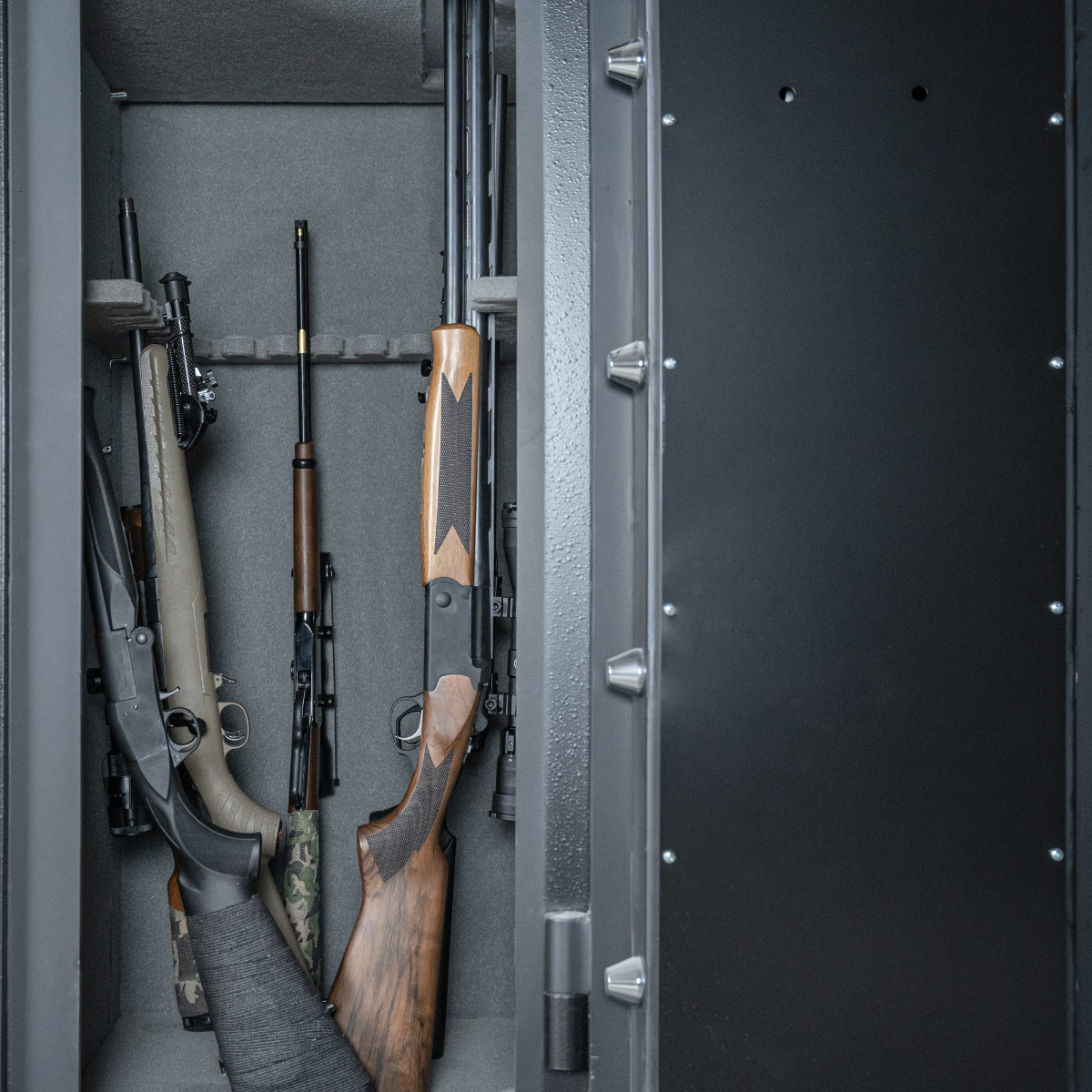
Police inspect your storage to confirm it meets legal requirements. Getting it wrong can delay a licence renewal, and for new NSW applicants, it can delay approval to acquire a firearm in the first place.
This guide walks through what a gun safe inspection in Australia actually covers, why inspections fail in practice, and how to make sure yours is ready before an inspector arrives.
Why Gun Safe Inspections Happen
The National Firearms Agreement Baseline
Every state and territory in Australia bases its firearm storage rules on the National Firearms Agreement. At its core, the Agreement requires that firearms be stored in a securely constructed and fixed receptacle, that ammunition be stored separately from firearms, and that the safe itself use a sturdy, reliable lock. It also requires jurisdictions to maintain a strategic inspection and audit program for storage, which is why inspections happen at all.
NSW’s New Rule
From 1 July 2026, NSW is introducing a significant change: firearm storage inspections will become mandatory before a first Permit to Acquire (PTA) is issued. In practice, this means new licence applicants in NSW won’t be approved to acquire a firearm until their storage has been checked and confirmed compliant.
A PTA application already requires a COPS Event Number confirming adequate safe storage, so this change formalises a check that’s effectively already part of the process. If you’re applying for your first PTA in NSW, getting your storage inspection-ready before you apply is now part of the approval process itself, not a separate step afterward.
What Police Actually Check
Construction and Bolt-Down Compliance
Police look closely at how the safe is fixed in place. Most states expect a safe under a certain weight threshold to be bolted to a solid structure, typically a concrete floor or masonry wall, using multiple anchor points rather than a single bolt.
A heavier safe may be exempt from bolting requirements in some states, but a lighter or freestanding unit almost always needs to be securely anchored.
Lock Quality and Type Approval
The lock itself matters as much as the body of the safe. Police check that the lock is of an approved type and in good working condition, since a non-approved or faulty lock can fail the inspection regardless of how solid the safe body is.
Ammunition Separation from Firearms
Ammunition must be stored separately from firearms, usually in a locked container of its own. It’s a straightforward requirement, but easy to overlook if ammunition ends up stored casually in the same space as the firearms themselves.
Key and Code Security
One of the most common compliance trip-ups isn’t the safe at all, it’s what happens to the keys or access codes. If a key is left hanging near the safe, stored in an unlocked drawer, or a digital code is shared with someone who shouldn’t have access, the safe itself can be fully compliant and the storage arrangement still fails. Keys and codes need to be kept secure and accessible only to the licensed owner.
Common Reasons Gun Safe Inspections Fail
Knowing what police check is one thing. In practice, most failures come down to a small number of situations that are easy to fall into without realising it:
- Moving house without re-bolting the safe: a safe that was compliant at the old property isn’t automatically compliant at the new one
- A spare key handed to a family member “just in case”: even a well-intentioned exception breaks the single-holder requirement
- Ammunition moved into the same cabinet during a clean-up: often temporary, but still non-compliant if it’s in place at inspection time
- DIY or improvised storage: a modified filing cabinet, generic lockable cupboard, or secondhand safe bought without checking its construction rating
- An outgrown safe: a collection that’s grown over time while the original, smaller-rated safe was never replaced
- A safe positioned somewhere too visible or accessible: a garage, spare room, or shed regularly used by visitors, tradespeople, or other household members, where its location alone can be the reason it fails.
Pre-Inspection Checklist
Before your inspection, run through this list:
- Confirm the safe is bolted correctly: check anchor points against your state’s requirements, particularly if the safe sits on a timber floor or if the safe has been moved since it was last inspected
- Test the lock: make sure it’s in good working order and of an approved type
- Separate your ammunition: confirm it’s stored in its own locked container, away from the firearms
- Secure your keys or codes: keys should not be left near the safe, and any digital code should only be known to you
- Check the safe’s visibility and location: it should not be positioned somewhere easily seen or accessed by visitors, tradespeople, or other household members
- Review your state’s specific rules: requirements can vary, particularly for gun safes versus other firearm storage categories
What Happens If You Fail
A pattern appears consistently across state guidance: a minor issue, such as a safe that needs re-bolting, typically results in a compliance notice with a deadline to fix it, followed by a reinspection to confirm the correction. More serious or repeat breaches can lead to licence suspension, and in some cases, seizure of firearms.
Under NSW’s new rule, the practical impact is more immediate. According to NSW Police’s own guidance on the reform, for NSW applicants, this isn’t just a compliance risk, it stops your PTA application from being submitted at all until it’s resolved.
Preparing properly before your inspection is booked is the simplest way to avoid either outcome.
How to Choose a Gun Safe That Passes Inspection
The most reliable way to avoid inspection issues is to start with a safe built around these requirements rather than retrofitting compliance later. Look for a safe with:
- Solid steel construction and multiple pre-drilled anchor points for secure bolting
- An approved, reliable lock type
- A dedicated, lockable ammunition compartment separate from the main firearm storage
- A size and configuration that suits how many firearms you need to store, so you’re not tempted to overcrowd or improvise additional storage
Stronghold’s range of Gun & Rifle Safes is built to these standards, with secure bolt-down points, approved locking options, and separate ammunition storage included as standard. Every safe is backed by a 5-year warranty on the safe body and 12 months on the lock, so compliance isn’t the only thing you’re covered for.