A safe makes sense when everything you need to protect fits inside a cabinet. A strongroom makes sense when it does not: when stock, records or a collection need walk-in space, when staff need to work inside the secure area, or when the value held is beyond what a single safe should carry. Jewellers, pharmacies with large stock holdings, serious collectors and businesses holding records or data are the typical candidates. A strongroom is a building project, not a delivery, and the door is only as strong as the room it is built into.
When a safe is enough
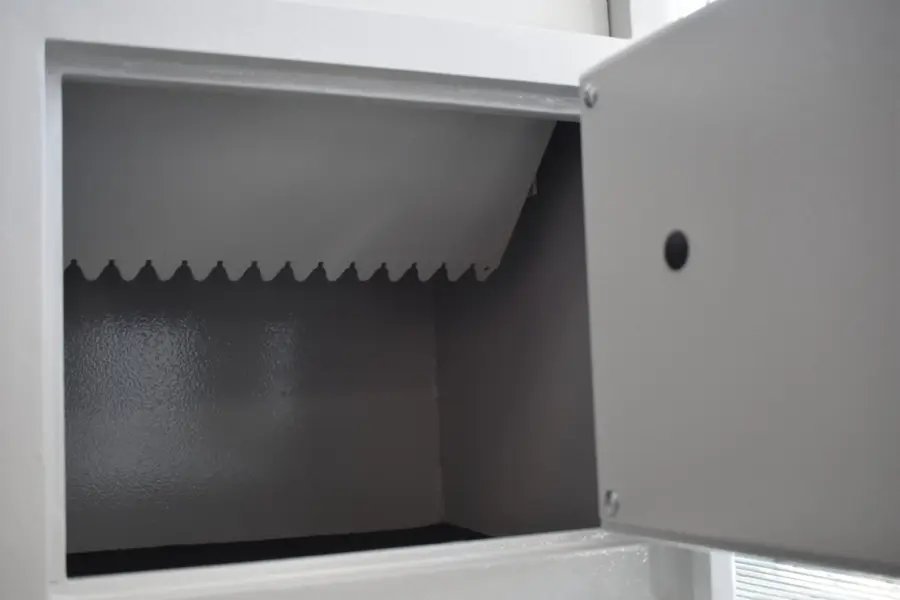
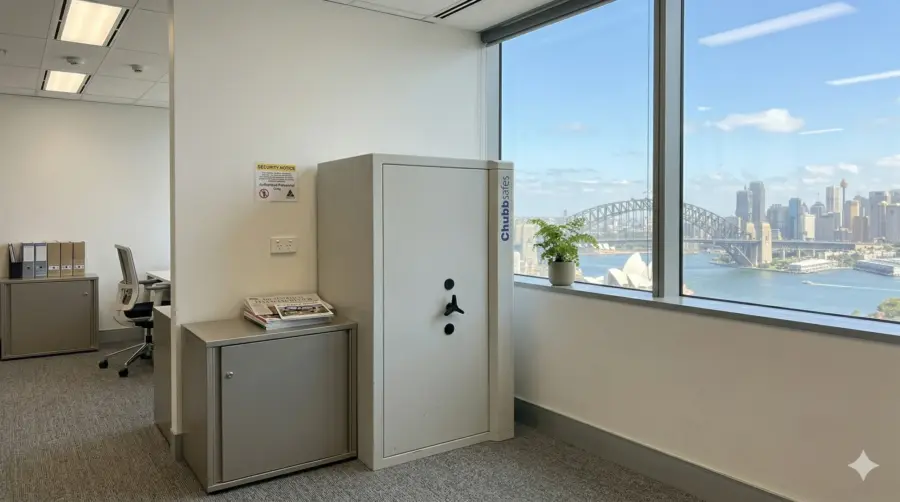
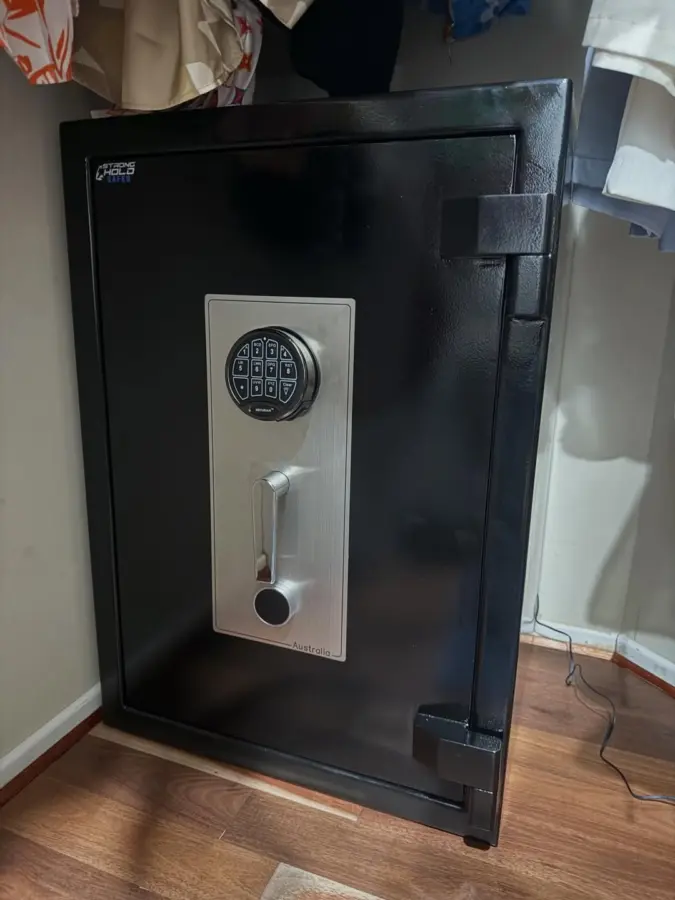
For most homes and many businesses, a well-chosen safe is the right answer. It is quicker to install, it can move with you, and the protection is built and rated as a single unit. A large safe also covers a surprising amount: the SC1600 security cabinet stands 1.6 metres tall with five adjustable shelves, and the largest DS Series safe, the double-door DS8, holds approximately 987 litres.
A safe starts to struggle when:
- you need more space than one or two large safes can provide;
- items are bulky, awkward or stored on racking, trays or shelving;
- staff need to stand inside to count, pick or audit;
- several safes would be needed, multiplying cost and floor loading;
- the value held is beyond what your insurer will accept in a safe.
Who uses strongrooms
- Jewellers: overnight storage for display trays and stock, so the full showroom can be cleared quickly at close.
- Pharmacies and healthcare: secure storage for large volumes of high-value stock. Controlled drug storage is regulated by each state, so confirm requirements with your regulator before designing a room.
- Collectors: firearms, coins, art, wine, documents and memorabilia that have outgrown cabinets. In Western Australia, for example, the firearms regulations recognise a compliant strongroom as a storage option at every level, according to WA Police’s storage and security information sheet.
- Businesses with records and data: archives, backup media and equipment that must survive both burglary and fire.
- Cash-handling businesses: counting rooms where staff work behind a secure door.
What a strongroom involves
The door is the most visible part, but it is one element of a system. A strongroom project typically involves:
The room
Walls, floor and ceiling built to resist attack, commonly reinforced concrete or a reinforced, steel-lined structure. An attacker will go through the weakest surface, so a vault door set into a plasterboard partition protects very little. A structural engineer and builder are usually involved, especially where a room is added to an existing building.
The door and frame
Strongroom doors are heavy. The Stronghold VD1 door weighs 475 kg and the VD2 410 kg, so the frame must be built solidly into the wall and the floor must carry the load. Delivery, positioning and fitting are specialist work.
Services and detection
Plan lighting, ventilation, fire detection and alarm sensors from the start. Many strongrooms also use a lockable day gate, so the main door can stand open during business hours while access stays controlled.
Approvals and insurance
Structural work may need building approval, and in a leased or strata building the owner’s consent. Talk to your insurer early: they may set requirements for the construction, the alarm and how the room is monitored, and it is far cheaper to build those in than to retrofit them.
Procedures
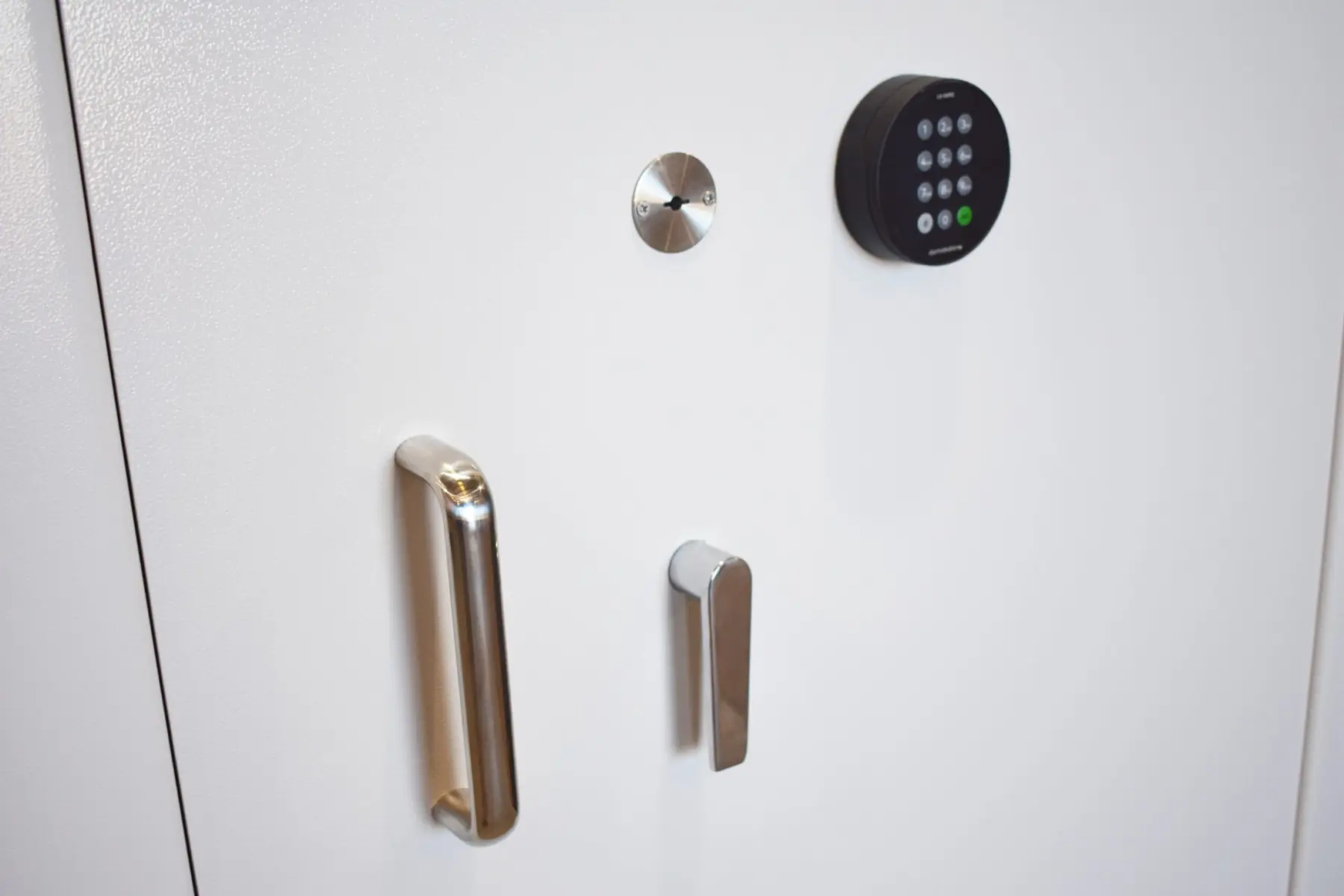
Decide who holds codes, when the room is opened and closed, and how access is recorded. A digital lock makes it simple to issue and change codes as staff change. A strongroom is only as secure as the routine around it.
Inward or outward opening?
Stronghold strongroom doors come in two configurations, both rated to 60 minutes of fire resistance with a suggested cash rating of $150,000 for an unsupported situation (no alarm), and a digital lock with multiple user codes, temporary codes and time-delay settings.
- VD1, outward opening: a 2010 × 990 mm frame with a 1930 × 845 mm clear opening, and a door weight of 475 kg.
- VD2, inward opening: a 2000 × 980 mm frame with a 1924 × 796 mm clear opening, and a door weight of 410 kg.
The choice is largely about space. An outward-opening door swings into the room or corridor outside the strongroom, keeping all of the interior free for shelving and racking, but it needs a clear arc outside the door. An inward-opening door swings into the strongroom itself, which suits sites where an outward swing would block a corridor, walkway or exit path, at the cost of some internal space. Measure both sides, consider where shelving will sit, and think about how people and stock will move through the opening.
Planning checklist
- List what will be stored, its value and how often it is accessed.
- Ask your insurer what construction they need for that value.
- Check any regulatory requirements, such as drug or firearm storage rules.
- Engage an engineer for walls, floor loading and door installation.
- Choose inward or outward opening based on space on both sides.
- Plan alarm, lighting, ventilation and fire detection early.
- Write access and opening procedures before the room is used.
Frequently asked questions
Can a strongroom door be fitted to an existing room?
Sometimes, but the room usually needs work. Walls, floor and ceiling must be strong enough to justify the door, and the opening and frame must be built to suit. An assessment is the first step.
Is a strongroom fire-rated?
Stronghold strongroom doors are rated to 60 minutes. The room’s overall fire performance also depends on how its walls, floor and ceiling are built.
How long does a strongroom project take?
It depends on the building work involved, from design and approvals to construction and door installation. Allow more time than for a safe delivery.
Should I choose a strongroom or several large safes?
Compare total capacity, floor loading, cost and daily workflow. If staff need to work inside, or stock is bulky, a strongroom usually wins.
To discuss a strongroom for your business, speak with a Stronghold specialist about the VD1 and VD2 strongroom doors and our UL vault rooms, or visit a showroom to talk through your plans in person.