Moving a safe is a specialist job because of its weight and how that weight behaves. Even a compact home safe can weigh 100 kg or more, drug safes run from 60 kg (DS1) to 780 kg (DS8), and strongroom doors weigh more than 400 kg, concentrated on a small footprint with a high centre of gravity. A professional relocation plans the route, protects the building, uses purpose-built equipment and puts the safe back level and bolted down. Attempting it with a few friends and a trolley risks serious injury, damaged floors and stairs, and a damaged safe.
How much does a safe weigh?
Weights across the Stronghold range give a sense of the scale:
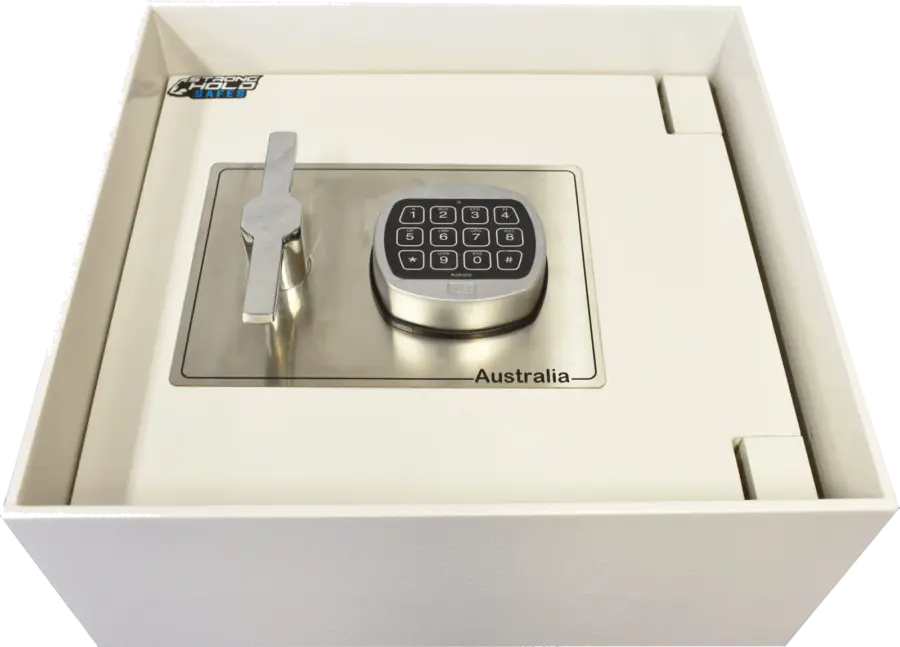
- HD Series home safes: 68 kg (HD1), 100 kg (HD2), 140 kg (HD3), 200 kg (the double-door HD2D) and 220 kg (HD4).
- WLS3 watch winder safe: 216 kg.
- SC1600 security cabinet: 165 kg.
- RS10 rifle safe: 180 kg.
- DS Series drug safes: up to 565 kg (DS7) and 780 kg (DS8).
- VD1 strongroom door: 475 kg.
Weight is only half the problem. The DS7 stands 1670 mm tall on a base of 760 × 550 mm. Tall, narrow and top-heavy loads tip easily, and once a safe starts to fall, no one should try to catch it.
Why stairs, floors and doorways change everything
Stairs
Stairs are where most of the risk sits. Each step takes the full weight on a narrow edge, turns and landings force awkward manoeuvres, and a slip on a staircase is far more dangerous than on the flat. Professionals use powered stair-climbing machines, which carry the safe step by step under control, rather than relying on people to take the load. External steps, slopes, gravel and wet surfaces add further hazards.
Floor loading
Floors are designed for loads spread across their area. As a guide, an RMIT building resource lists a design live load of 1.5 kPa for houses, roughly 150 kg per square metre, and 3.0 kPa for offices. A DS7 at 565 kg on a base of about 0.42 square metres concentrates more than 1,300 kg per square metre. That is rarely a problem on a concrete slab on ground, but suspended timber floors, upper storeys, mezzanines and older buildings deserve a proper check, sometimes by a structural engineer. The route matters as well as the destination: equipment wheels concentrate the load further, so movers lay boards or plates to spread it.
Doorways and lifts
Measure every doorway, hallway and turn on the route, allowing for the equipment as well as the safe. Doors may need to come off their hinges. For apartments and offices, confirm the lift’s internal dimensions and rated load, which must cover the safe, the equipment and the people moving it, and book it with building management.
The equipment professionals use
- Powered stair climbers for controlled movement up and down stairs.
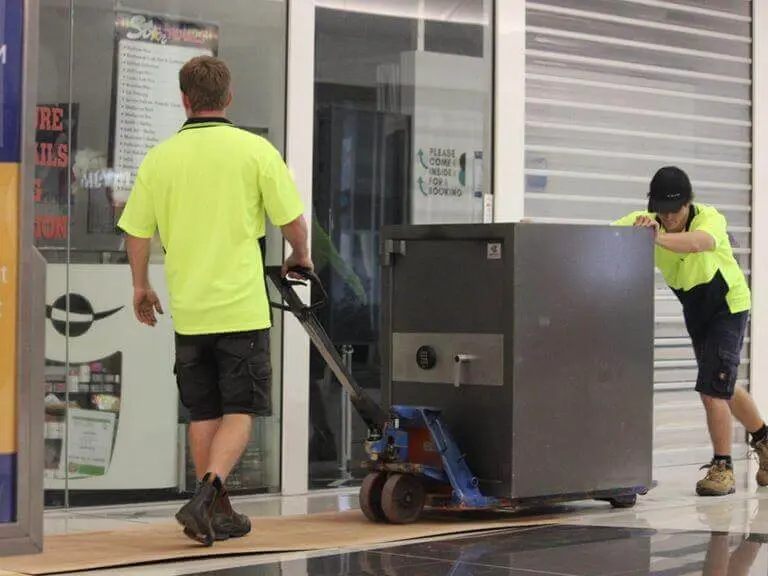
- Heavy-duty safe trolleys with straps to secure the load.
- Pallet jacks, skates and rollers for moving heavy safes across level floors.
- Ramps, plates and floor protection to bridge steps and spread load.
- Vehicles with tail-lifts or cranes for loading and unloading safely.
Moving heavy, awkward loads is a recognised workplace hazard. Safe Work Australia’s model code of practice for hazardous manual tasks explains how businesses should identify and control these risks, which is why professional movers rely on equipment, not muscle.
What a professional relocation involves
- Assessment. The mover confirms the safe’s model and weight, and checks both sites for stairs, floor type, access and parking, often using your photos and measurements.
- Planning. The route, equipment, team size and any floor protection are agreed in advance.
- Preparation. You empty the safe. The mover removes the anchor bolts, takes out loose shelves and closes and locks the door so it cannot swing open in transit.
- The move. The safe is moved on suitable equipment, secured in the vehicle and transported.
- Installation. At the new site, the safe is positioned, levelled and bolted down with new fixings suited to the floor.
- Handover. The door, bolts and lock are tested in front of you.
Preparing your site
- Empty the safe yourself and keep the contents secure during the move.
- Make sure you have the code or key, and that the lock is working.
- Clear the route of furniture, rugs and obstacles at both ends.
- Tell the mover about every step, slope, tight turn and soft surface.
- Arrange parking close to the entrance for a truck.
- Book lifts and loading docks, and check strata or building rules.
- Decide exactly where the safe will go, and whether the floor can be drilled for anchoring.
- Keep children and pets well away on the day.
The old anchor holes will need filling, and the new position should suit bolting down. The HD Series range page lists each model’s dimensions and published weight if you are planning a new installation.
Key takeaways
- Safes are heavy, top-heavy and concentrate weight on a small footprint.
- Stairs, suspended floors and lifts need planning and the right equipment.
- A professional move includes unbolting, transport, levelling and re-anchoring.
- Empty the safe, measure the route and brief the mover honestly.
- Always re-bolt a safe after moving it.
Frequently asked questions
Can I move a small safe myself?
A small safe on level ground, with the right trolley and help, can be manageable. Once stairs, tight access or anything over about 100 kg are involved, use a professional.
Should the safe be empty?
Yes. Contents add weight, can shift and damage the interior or lock, and are at risk if anything goes wrong.
Do I need to bolt it down again?
Yes. A safe that is not anchored can be carried away, and your insurer may require it to be fixed.
Can Stronghold deliver to an upstairs room?
In many cases, yes. Tell us about the stairs and access when you order, so we can plan the right equipment.
Planning a move or a new installation? Speak with a Stronghold specialist about delivery and installation Australia-wide, or visit your nearest showroom for advice on safe relocation in your area.