Choose an in-floor safe if concealment and attack resistance matter most and you have a concrete slab. Choose an in-wall safe for discreet, quick access to documents and small valuables. Choose a freestanding safe if you need capacity, fire protection or the flexibility to take it with you when you move. Many households end up with two: a freestanding, fire-rated safe for documents and a concealed safe for the items no visitor should ever know about.
The quick comparison
- In-floor: excellent concealment and very hard to remove; modest capacity; installed into a concrete slab; awkward to reach.
- In-wall: good concealment and easy access at standing height; shallow, so limited capacity; fits a stud wall; relies mainly on staying hidden.
- Freestanding: the most capacity and fire protection; visible if found, so it relies on construction and anchoring; can be moved with you.
In-floor safes
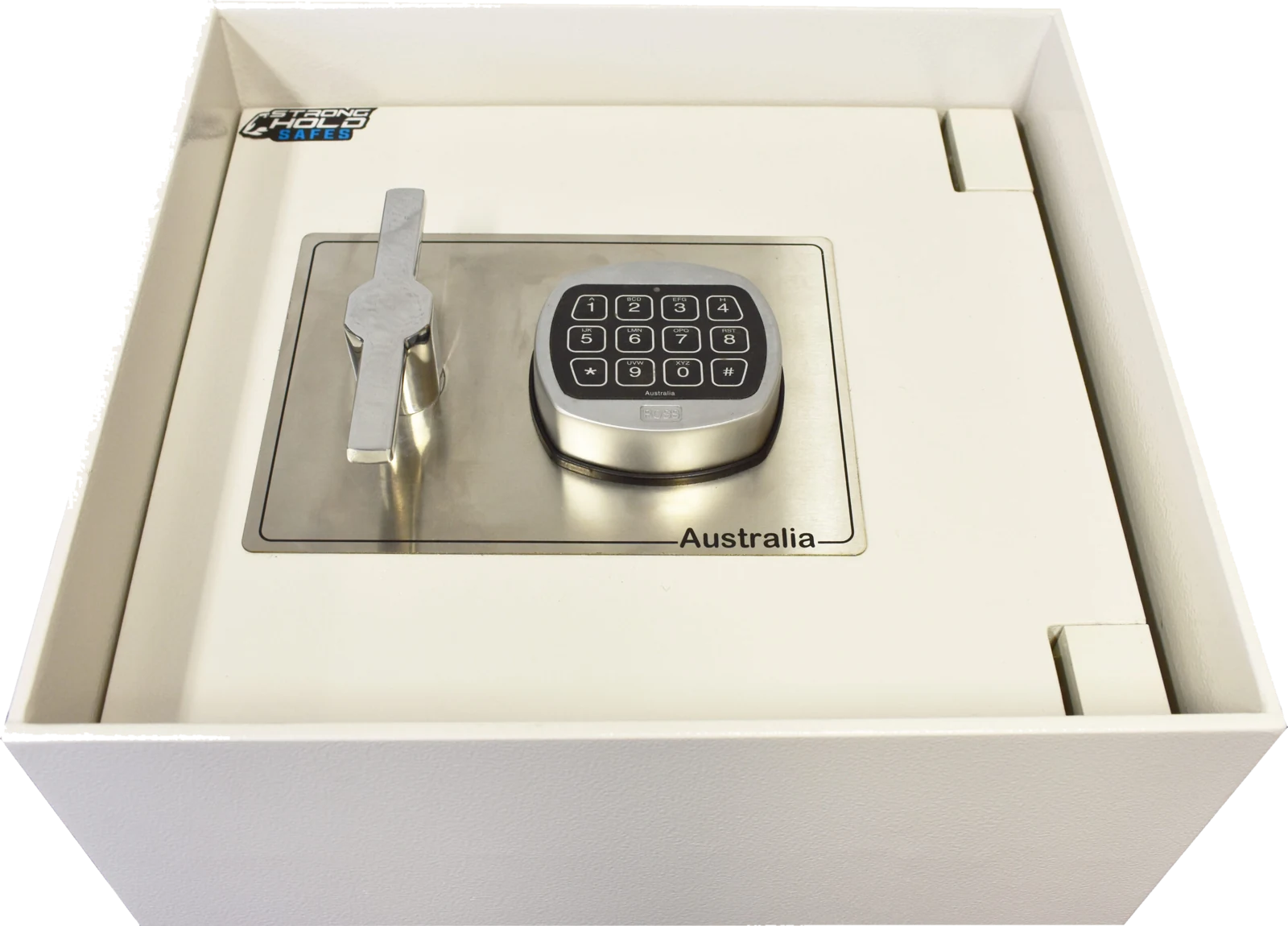
An in-floor safe is set into the concrete slab, with its lid flush with the floor and hidden under carpet, a rug or a cupboard. Because it is surrounded by concrete, it cannot be carried away, and only the lid is exposed to attack.
Stronghold’s In-Floor Safe TDR has a 95 mm torch- and drill-resistant door, 32 mm solid steel bolts, a ROSS digital keypad that sit flush under a dust-cover lid. It measures 402 × 375 × 370 mm (H × W × D) and carries a suggested cash rating of $125,000 for an unsupported situation (no alarm).
Installation considerations
- A concrete slab is essential. In-floor safes suit slab-on-ground floors, not suspended timber floors or most upper storeys.
- New builds are easiest. The position can be planned before the slab is poured. In an existing home, the slab is cut, excavated and the safe set in new concrete.
- Check the slab first. Look for services, post-tensioning and, in waffle pod slabs, the location of the ribs and pods. Engineering advice may be needed.
- Avoid damp spots. Keep clear of wet areas and anywhere prone to water.
The trade-off is access: you will kneel to open it, and capacity is modest. The TDR does not carry a published fire rating, so do not treat it as fire protection for documents.
In-wall safes
An in-wall safe sits flush within a stud wall, behind a painting, a mirror or a wardrobe door. It is quick to reach at a comfortable height and invisible once covered.
Stronghold in-wall safes are 90 mm deep to suit a stud wall, with a flanged steel body, a flush door, key locking and internal shelving. The Size 1 measures 380 × 380 mm and weighs 18 kg. The Size 2 measures 790 × 380 mm, weighs 29 kg and has two key locks on its single door. Both sizes carry a suggested cash rating of $5,000 for an unsupported situation (no alarm).
Installation considerations
- Stud spacing and depth. Australian wall frames commonly use studs at 450 or 600 mm centres; your installer will confirm the safe fits between them and that the wall depth suits.
- Services in the wall. Check for cables, pipes and switches before cutting.
- Internal walls are usually best. They avoid insulation, sarking and weatherproofing, and are easier to conceal.
- Fix securely to the framing, and finish the plasterboard neatly so the flange sits flush.
An in-wall safe’s main defence is concealment. With limited depth and no listed fire rating, it suits passports, jewellery and small valuables, not bulky items or originals that must survive a fire.
Freestanding safes
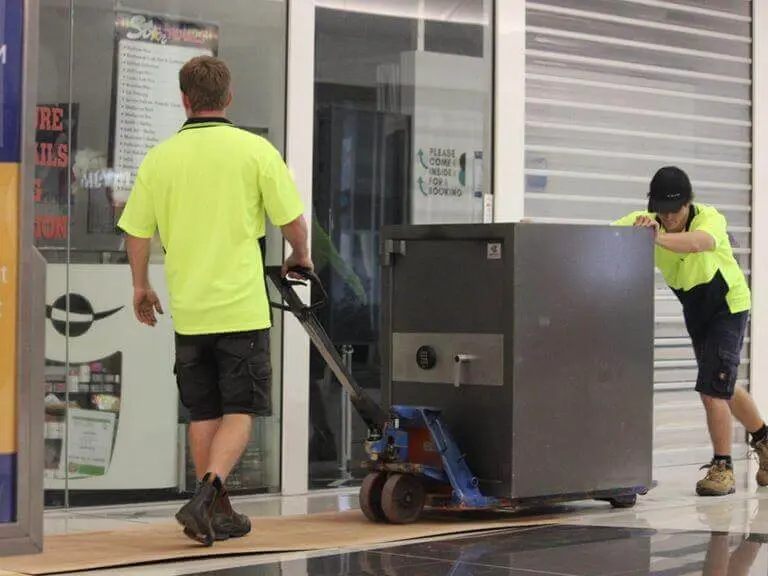
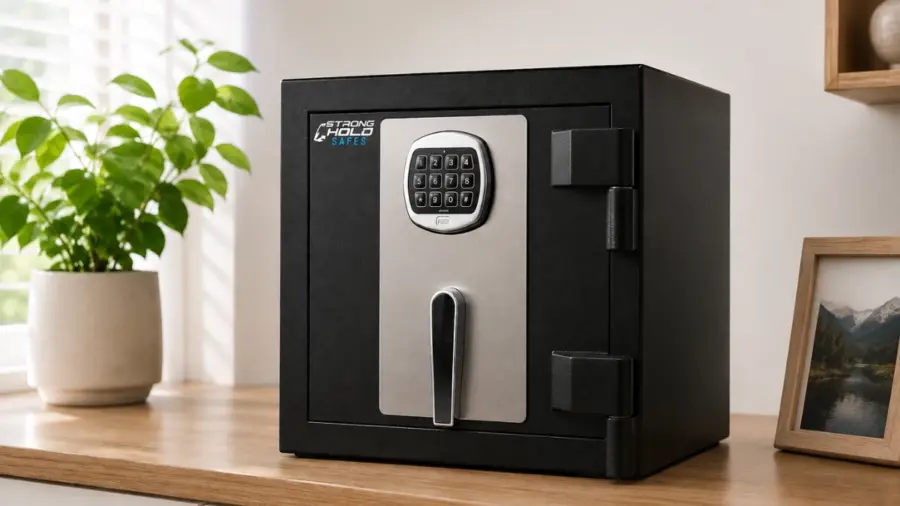
A freestanding safe offers the most capacity, the widest choice of locks and, on many models, fire protection. Properly bolted to the floor, it becomes a fixture.
The HD Series has six models, from the 22-litre HD1 to the 990 mm tall HD5, including the double-door HD2D. Every model has 30 mm four-way boltwork, a felt-lined interior and a digital lock as standard (ROSS on the HD1 to HD4, LA GARD on the HD2D and HD5), with key and dial options. All six HD models are rated to 40 minutes of fire resistance, and each has four 16 mm recessed anchor holes.
Installation considerations
- Bolt it to a concrete slab, or into the bearers or joists of a timber floor. See how to bolt down a safe.
- Allow for the door swing and the weight, 220 kg for the HD4.
- Conceal it in a robe or cupboard where practical.
Who each type suits
- In-floor: owners of slab homes who keep cash or high-value items and want the most discreet option, especially when building or renovating.
- In-wall: homeowners who want everyday valuables hidden in a bedroom, robe or study, where quick, discreet access matters most.
- Freestanding: households that need to protect documents from fire, store larger items, or may move house.
Questions to ask before you choose
- What will you store, and how much space does it need?
- Does any of it need protection from fire?
- Is your floor a concrete slab or suspended timber?
- Are you building, renovating or retrofitting?
- How often will you open the safe?
- What does your insurer need for the value you hold?
Frequently asked questions
Can I install an in-floor safe in an existing home?
Often, if the home is on a concrete slab. The slab is cut and excavated and the safe is set in new concrete. A site check comes first.
Are in-wall safes fire-rated?
Stronghold in-wall safes do not carry a fire rating. For documents that must survive a fire, use a fire-rated freestanding safe.
Which type is the most secure?
For resistance to removal and attack, an in-floor safe set in concrete is hard to beat. For overall protection, including fire, a bolted freestanding safe is often the better choice.
Would an in-wall safe suit a rental?
Only with the owner’s written permission, as it involves cutting the wall. A bolted freestanding safe may be simpler, again with permission.
Still deciding? Speak with a Stronghold specialist about your home and what you need to protect, or visit a showroom to compare in-floor, in-wall and freestanding safes side by side.