
A drug safe can meet every construction standard on paper and still fail an inspection if it isn’t installed or located correctly. For pharmacies, clinics, hospitals, veterinary practices, and aged care facilities storing controlled medicines, placement and installation are assessed separately from the safe itself, and both are checked during an audit or inspection.
This guide covers the location rules that apply to drug safes in Australian healthcare settings, including floor and wall bolting requirements, restricted access rules, and key custody practices.
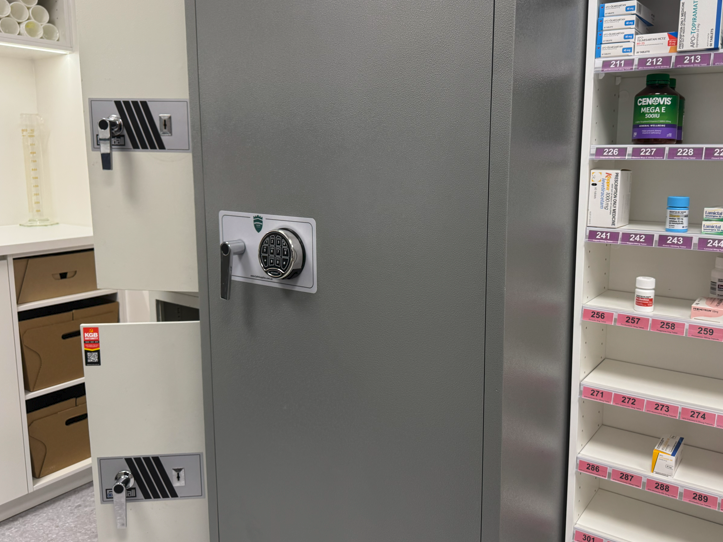
Why Installation Matters as Much as the Safe
Auditors assess two separate things: whether the safe itself meets the required construction standard, and whether it has been placed and secured in a way that prevents unauthorised access. A safe left unbolted, positioned in a high-traffic area, or accessible to untrained staff can fail an audit even if its steel, locking mechanism, and rating are fully compliant.
Core Location and Installation Requirements
Floor and Wall Bolting Requirements
Anchoring To Concrete Or Masonry
The standard expectation is that a drug safe is bolted securely to a concrete floor or masonry wall, not left free-standing. NSW Health guidance for accountable medication storage, for example, specifies that the storage cupboard must be “securely attached to the structure of the building, i.e. wall or floor,” which reflects the general principle applied across most jurisdictions. In some cases, a sufficiently heavy safe may not require bolting, but bolting to a solid structure remains the more widely accepted approach and the one auditors expect to see by default.
No Concrete to Bolt Into?
Many pharmacies and clinics operate out of shopping centres or leased premises with suspended floors, plasterboard walls, or timber flooring rather than concrete. This is a common problem and needs to be addressed before installation rather than after. If your site doesn’t have a suitable concrete or masonry surface to anchor into, the right approach is to have an experienced safe installer assess the site and recommend a compliant fixing method for your specific building structure, rather than defaulting to a safe that simply sits unanchored.
Restricted Access Room Requirements
Where the safe sits within the premises matters as much as how it’s fixed down:
- Location: situated somewhere that isn’t visible or accessible to the public or to patients, typically within a dispensary or a restricted staff-only area
- Distance from high-traffic zones: away from reception, waiting areas, and delivery points where foot traffic is highest
- Locked and secured at all times: controlled medicines must be stored so the facility remains locked and secured against unauthorised access at all times, with the safe opened only when necessary for an essential operation such as dispensing or stocktake
- No exceptions for otherwise-compliant setups: placement in a public-facing area or an unrestricted-access room undermines this requirement regardless of construction quality
Key Custody Rules
Who Holds The Key During Operating Hours
During operating hours, the key or access code should be held by a single authorised person, typically the pharmacist or another designated staff member, rather than being freely accessible to anyone on shift. Queensland’s storage and record-keeping requirements for controlled medicines go a step further, requiring facilities to formally nominate a “safe establisher” and a “safe manager,” named individuals or positions responsible for the safe, with penalties applying to authorised users who fail to keep their access code or device secure. Even where this exact structure isn’t mandated in your state, appointing clear, named responsibility for the safe is worth doing regardless.
Some larger facilities use an electronic keypad with individual PINs instead of a physical key, so access can be logged per person and a code deactivated as soon as someone leaves the role.
Shift Change and Overnight Handover
Custody needs to be documented at the point it changes hands. A common and practical approach is a sealed, signed handover at the end of the day, with the key stored securely overnight, and a log recording who held it and when.
The Problem With Shared Keys
A shared, unlogged key defeats the purpose of key custody altogether. If more than one person holds the same key without a record of who used it and when, there’s no way to establish who accessed the safe at a given time. This is one of the most common gaps identified during audits.
When Placement or Access Control Fails
A drug safe that isn’t anchored correctly, is positioned somewhere accessible to unauthorised people, or has no clear key custody process in place can fail an audit regardless of how compliant the safe itself is. A common example is a safe that meets the required steel and locking standard but sits unbolted in a storeroom that any staff member can enter unsupervised. Another is a safe positioned correctly but with keys left in an unlocked drawer nearby, which undermines the access control just as much as an unlocked door would.
Getting Placement Right From the Start
Installation and access planning are easiest to get right before the safe is delivered, not after. Before installing a drug safe, it’s worth confirming:
- Whether your site has a suitable concrete or masonry surface for anchoring, or whether a professional assessment is needed
- Where the safe will sit relative to public areas and staff-only zones
- Who will hold the key or code during operating hours, and how handover will be documented
- How custody will be logged at shift change and overnight
- Whether medications prone to mix-up, such as similarly named or packaged drugs, are stored on separate shelves within the safe rather than side by side
- What your specific state health authority requires for controlled medicine storage
- Requirements are set separately in each state: NSW under the Poisons and Therapeutic Goods Regulation 2008, Victoria under the Drugs, Poisons and Controlled Substances Regulations 2017, Queensland under its Departmental Standard for Secure Storage of Schedule 8 Medicines, and similarly in other jurisdictions. It’s worth confirming the current version of your state’s requirements directly, since these are updated periodically.
Stronghold’s range of Drug Safes is built to the required construction standard and designed to support compliant installation, whatever your site’s layout. Every safe is backed by a 5-year warranty on the safe body and 12 months on the lock. Get in touch with Stronghold’s team for guidance on the right setup for your facility.