For most homes and businesses, a quality digital lock is the best all-round choice: it is fast, you can change the code yourself, and selected models add multiple users, audit trails and time delay. A key lock suits simple, low-use storage and works well as a backup, but only if the keys are properly controlled. A mechanical dial combination lock needs no batteries and lasts for decades, at the cost of slower opening and less flexibility. The right answer depends on who opens the safe, how often, and what you need to know about each opening.
Digital locks
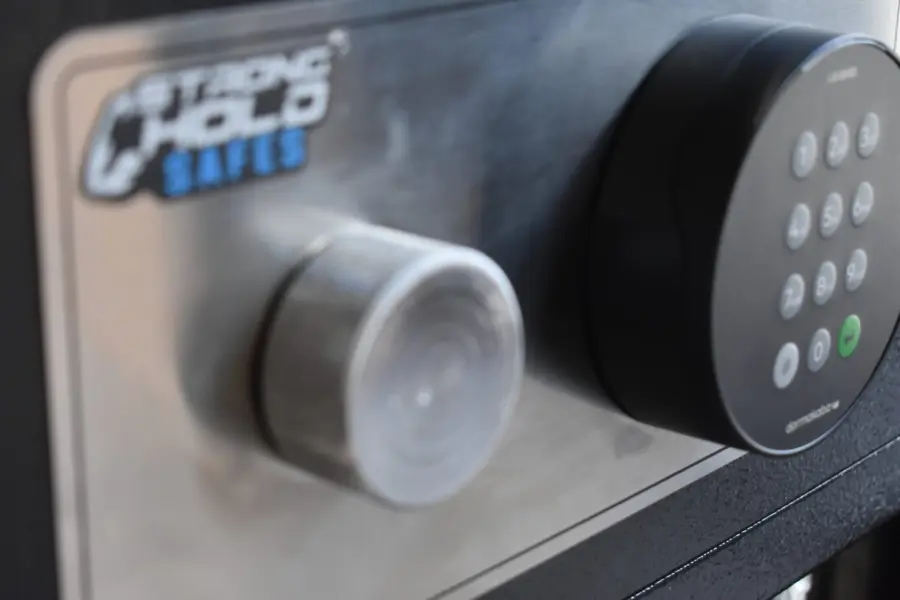
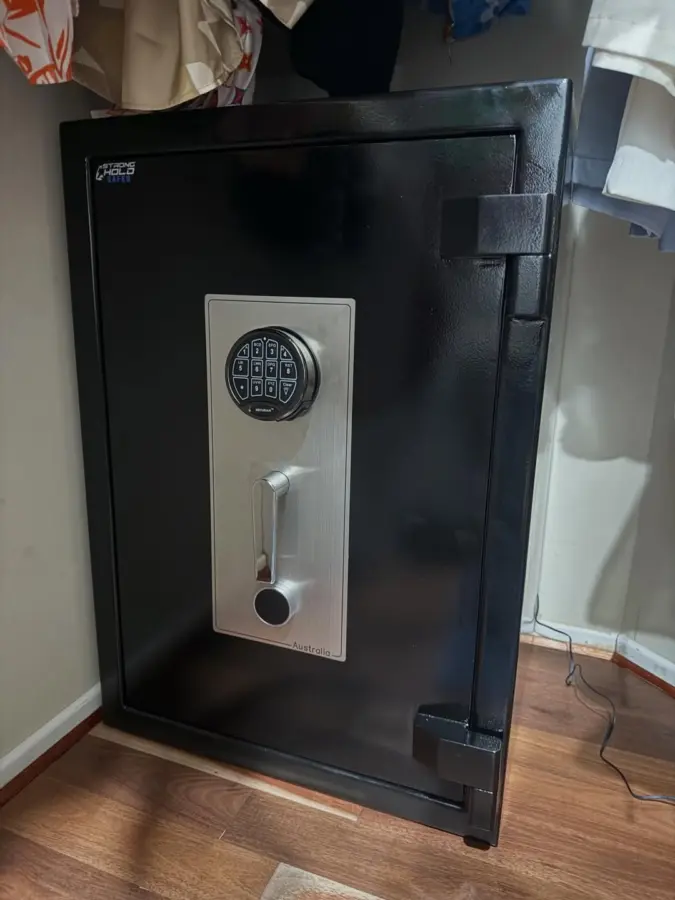
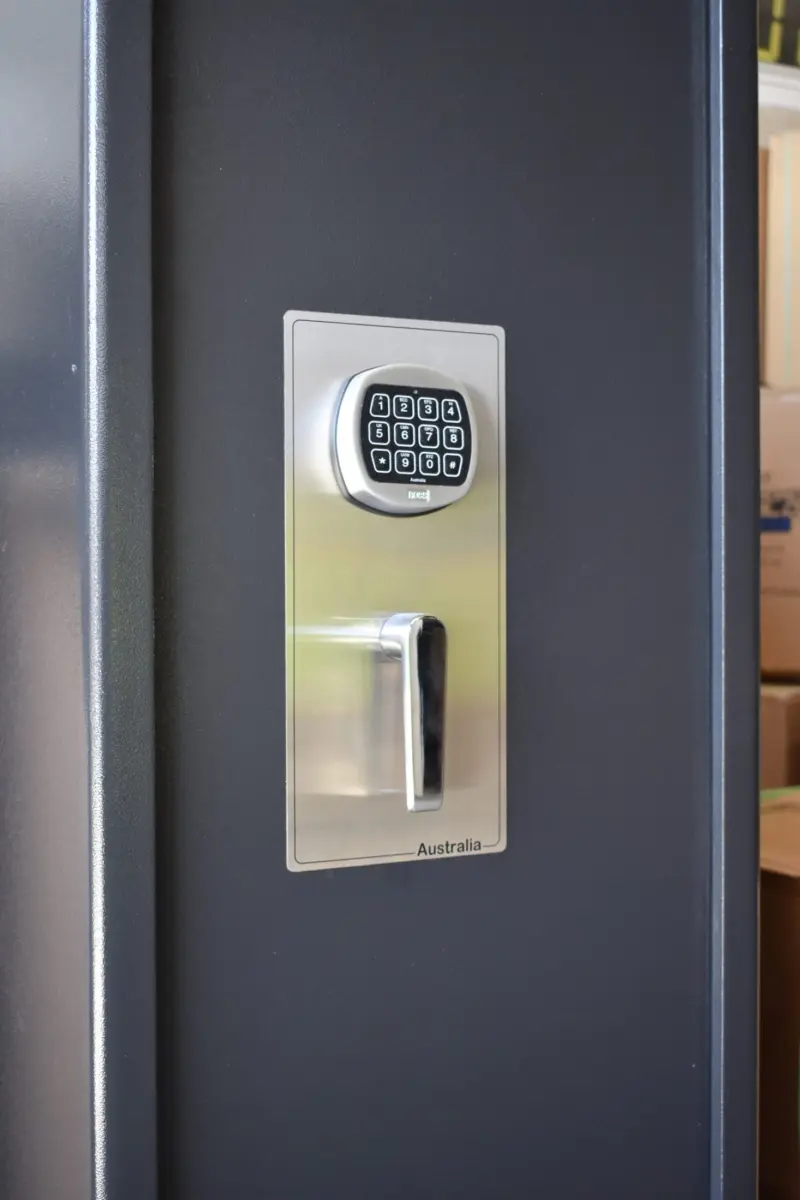
A digital (electronic) lock opens with a numeric code entered on a keypad. It is now the standard choice on most Stronghold safes. The HD Series has a digital lock as standard (ROSS on the HD1 to HD4, LA GARD on the HD2D and HD5), while the WLS Collection uses backlit SecuRam digital locks.
Advantages
- Speed. Enter the code, turn the handle, and the safe is open in seconds.
- Codes you control. You can change the code yourself whenever staff, family members or circumstances change, without calling a technician.
- Multiple users. Many digital locks support a manager code plus one or more user codes. ROSS’s L22, for example, supports up to 30 users.
- Business features. Selected locks offer time delay, dual control, duress codes and audit trails. The ROSS L22 and L66 add an audit trail and a duress facility, and the LA GARD 702 Audit records every opening and closing with a time stamp.
Things to manage
- Batteries. Digital locks need power. Battery life varies with use and model; SecuRam’s SafeLogic Basic runs for about a year on one 9V battery. Replace batteries at the first low-battery warning, using the type specified in your lock’s instructions.
- Code discipline. Avoid obvious codes such as birthdays or 123456, shield the keypad when entering it, and change the code when someone who knew it no longer needs access.
- Environment. Like any electronics, keypads are best kept away from moisture and extreme heat.
For more connected options, the Australian-made ROSS BLE lock can be operated from a smartphone with up to 96 eKeys, and the ROSS BIO uses a fingerprint sensor for up to 30 users.
Key locks
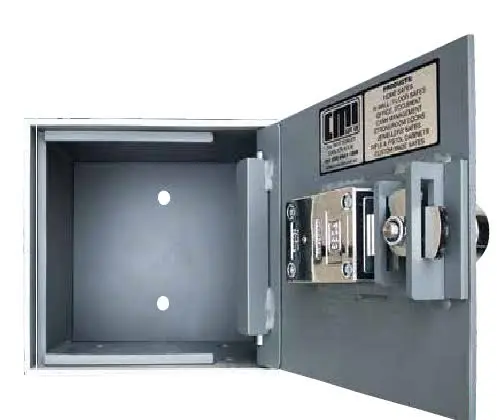
A key lock is the simplest form of security: no batteries, no codes to forget and nothing electronic to fail. Stronghold in-wall safes use key locking, and key locks are an option on many other models.
- Strengths: straightforward to use, unaffected by flat batteries, and familiar to everyone.
- Weaknesses: a key can be lost, copied or found. A safe is only as secure as the place its key is kept, and a key hidden in the bedside drawer is one of the first things a burglar looks for.
- No record. A key lock cannot tell you who opened the safe or when.
Keys are particularly useful as an override on a digital lock. The RS10 rifle safe offers a digital keypad with key override, the In-Floor Safe TDR offers one as an option, and WLS watch winder safes can add an optional key lock, giving a mechanical backup if a code is forgotten or a battery fails.
Dial combination locks
A mechanical dial combination lock opens when the dial is turned to a sequence of numbers in the correct order and direction. It is the traditional safe lock, and it remains an option on the HD Series, the DS Series drug safes, the RS10, the SC1600 and the laptop safe.
- Strengths: no batteries or electronics, a very long service life, and no keys to lose.
- Weaknesses: slower to open, and it takes practice to dial accurately. Changing the combination is generally a job for a technician, and a dial lock typically has a single combination with no audit trail.
Dial locks suit people who open the safe occasionally, value mechanical simplicity and are happy to keep a combination for years.
Business features explained
Digital locks add user codes, time delay and audit trails on selected models. These matter most where several people share access or cash is on site.
- Audit trail: a record of which code opened the lock and when, useful for accountability and investigating discrepancies.
- Time delay: after the correct code is entered, the lock waits a set period before it can be opened. Staff cannot open the safe on demand, which makes a business a less attractive robbery target.
- Dual control: two separate codes are needed, so no single person can open the safe alone.
- Duress code: a special code that opens the safe while triggering a silent alarm, where the lock is connected to an alarm system.
Which lock suits a home, and which suits a business?
Homes
A digital lock is the practical choice for most households: quick daily access, a code you can change, and no key to hide. Choose a key override if you worry about forgetting the code, or a dial lock if you open the safe rarely and prefer mechanical simplicity. A home safe from the HD Series can be fitted with any of the three.
Businesses
Where staff share access, a multi-user digital lock with an audit trail is hard to beat. Add time delay if you hold cash, and dual control for high-value contents. Pharmacies, retailers and offices should match the lock to their written access procedures. The DS Series drug safes and the SC1600 security cabinet can each be fitted with a digital, key or dial combination lock.
Key takeaways
- Digital locks offer speed, user-changeable codes and, on selected models, audit trails and time delay.
- Key locks are simple but depend entirely on how well the keys are controlled.
- Dial combination locks need no batteries and last for decades, but are slower and harder to re-code.
- A key override gives a digital lock a mechanical backup.
- Choose the lock around who opens the safe, how often, and what you need to record.
Frequently asked questions
Are digital safe locks less secure than mechanical locks?
Not inherently. A quality digital safe lock is designed to resist manipulation and is protected by the safe’s hard plate and re-locking devices. The bigger risks are weak codes and poor key or code control.
What happens if the battery goes flat?
On most digital safe locks the battery sits in the keypad on the outside of the door, so it can be replaced with the safe locked. Check your model’s guide on our lock instructions page.
Can I change from a key lock to a digital lock later?
It depends on the safe and the lock. Ask us before you buy if you think your needs may change, as it is simpler to choose the right lock at the start. For lock upgrades, see our safe locks range.
Which lock is on my safe?
The brand is printed on the keypad. If you are unsure, send us a photo and we will help identify it.
Still deciding? Speak with a Stronghold specialist about how your safe will be used, or visit a showroom to try digital, key and dial locks for yourself before you choose.